
 Polski
  Українська
  Русский
 ![Greenery in Residential Developments – What Sets Novisa Development Apart [Interview]](https://novisa.pl/wp-content/uploads/2026/09/aleja-spacerowa-lawki-i-roslinnosc-na-nowym-osiedlu-od-novisa-development-apartamenty-przyjaciol-1220x590.jpg)
Estimated reading time: 1 minute
What truly sets a great property developer apart? In our opinion, it’s whether they see a residential estate as one complete project rather than a checklist of separate tasks. Buildings are only part of the picture. The space between them—lawns, hedges, trees, pathways, places to relax and play—is just as important. And that’s exactly why we design these green spaces with the same care as the homes themselves.
To show you what this process really looks like behind the scenes, we sat down with Agnieszka, our landscape architect who has been designing greenery for Novisa Development estates for years. We asked her everything—from where her ideas come from and how she chooses plants to what happens after residents receive their keys.
Table of contents
- Greenery is an integral part of the project
- Interview with Agnieszka – Landscape Architect at Novisa Development
- What does your landscape design process look like—from the first idea to completion?
- What inspires you, and what makes your approach to greenery unique?
- How do you choose plants so that an estate looks beautiful all year round?
- What happens to the greenery after the estate is completed?
- About privacy, benches and community spaces
- Greenery on a residential estate – what to look for when choosing a developer
- Summary
- FAQ – most common questions about greenery on residential estates
Greenery is an integral part of the project
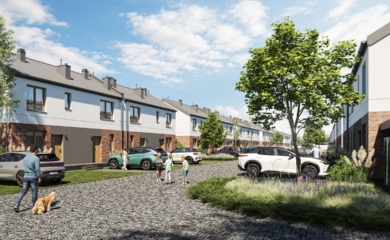
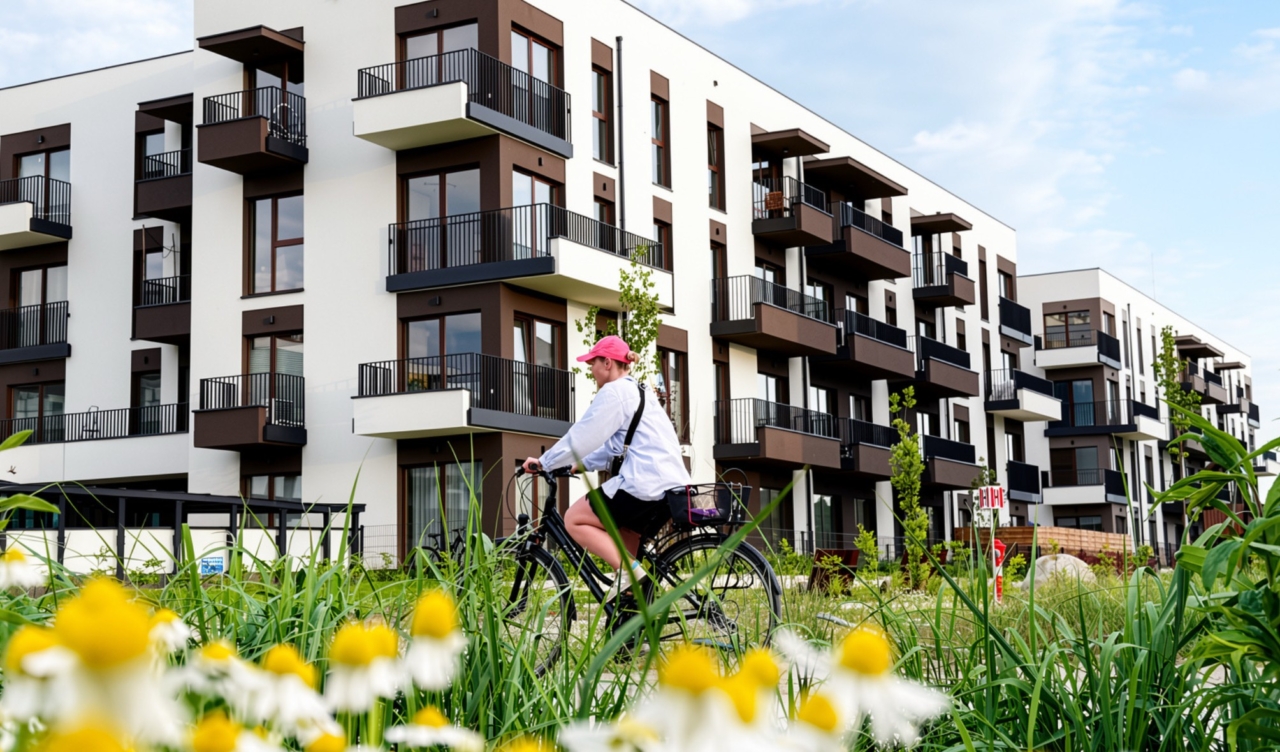
Imagine two residential estates. On the first, there are rows of freshly planted thuja hedges, a lawn sown without much thought, and not a single tree offering shade. On the second, there are hedges that gradually become natural privacy screens, perennial flower beds blooming from April to October, and benches where you can sit with your child.
The difference is no coincidence. It comes down to one thing: when the developer starts thinking about greenery during the design process.
For many smaller developers, landscape design is one of the final items on the checklist—something that simply needs to be “finished somehow” to obtain the occupancy permit. We take a completely different approach. At Novisa Development, greenery is designed alongside the buildings, not after them. You can see the difference not only in the numbers, but also in how your neighbourhood looks, feels and even smells years after completion—not just on handover day.
Now let’s give the floor to the person who actually designs this greenery—Agnieszka, our landscape architect.
Interview with Agnieszka – Landscape Architect at Novisa Development
What does your landscape design process look like—from the first idea to completion?
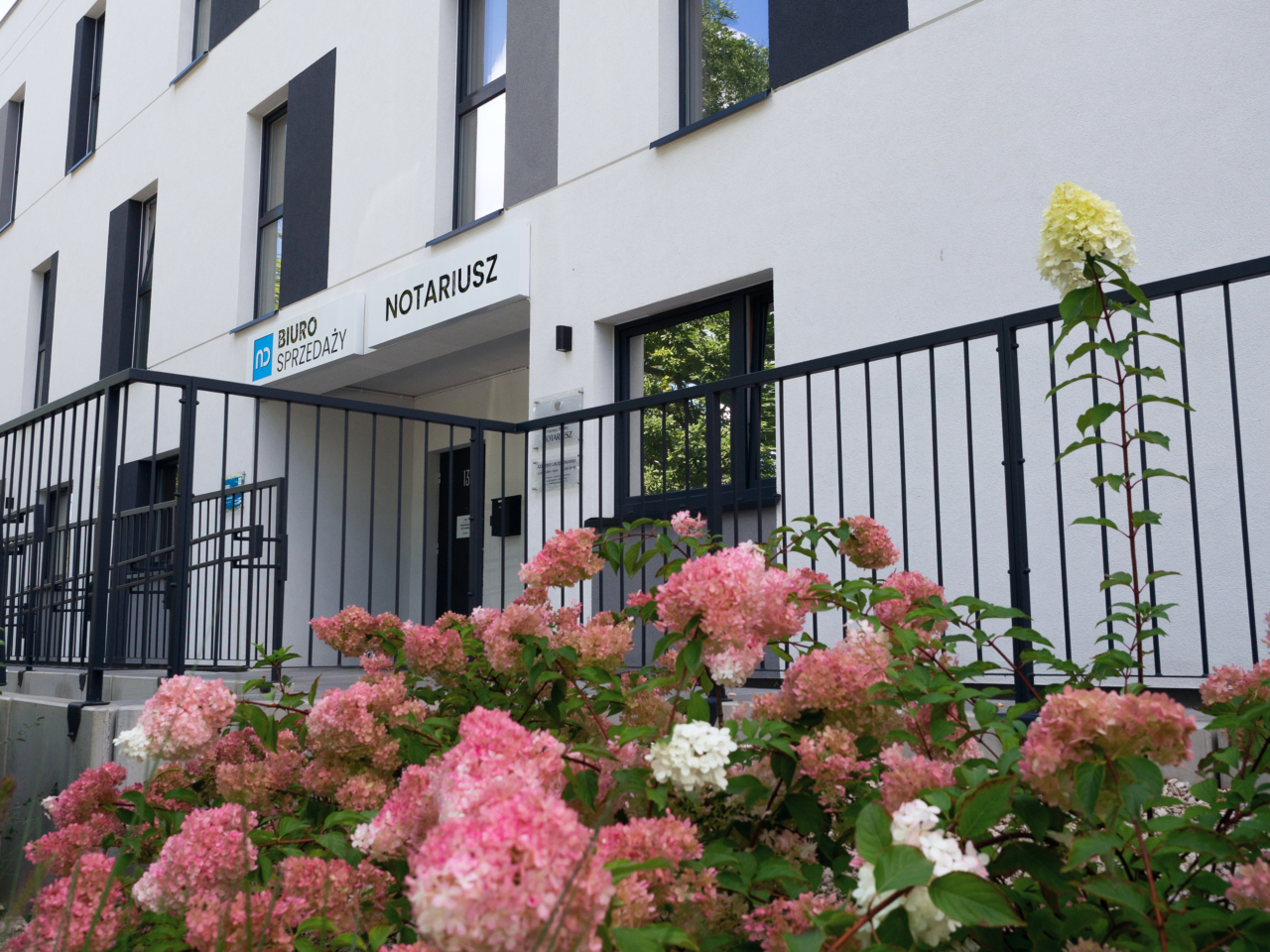
Agnieszka: I treat landscape design as an integral part of the residential estate project, not as a stage that comes at the very end of the development. I always begin by analysing the site before anything is built. I look at the character of the plot, its location, surrounding environment, terrain, existing greenery and habitat conditions. It’s equally important to understand how future residents will use the space.
During the architectural design phase, I work closely with the lead architect to assess the existing trees and determine which ones can be preserved. Based on all this information, I prepare the initial landscape concept, which also serves as the foundation for the estate’s visualisations. From there, the design evolves and is refined all the way to construction.
Editorial team: In other words, before you ever see the first visualisation of your future home, Agnieszka already knows which mature trees we can preserve and where new planting will appear.
What inspires you, and what makes your approach to greenery unique?
Agnieszka: My biggest inspiration is nature itself and the local character of each place, but I’m equally inspired by the needs of future residents. I want greenery to be much more than decoration—it should create a cohesive, welcoming and functional environment while enhancing the character of the architecture.
How do you choose plants so that an estate looks beautiful all year round?
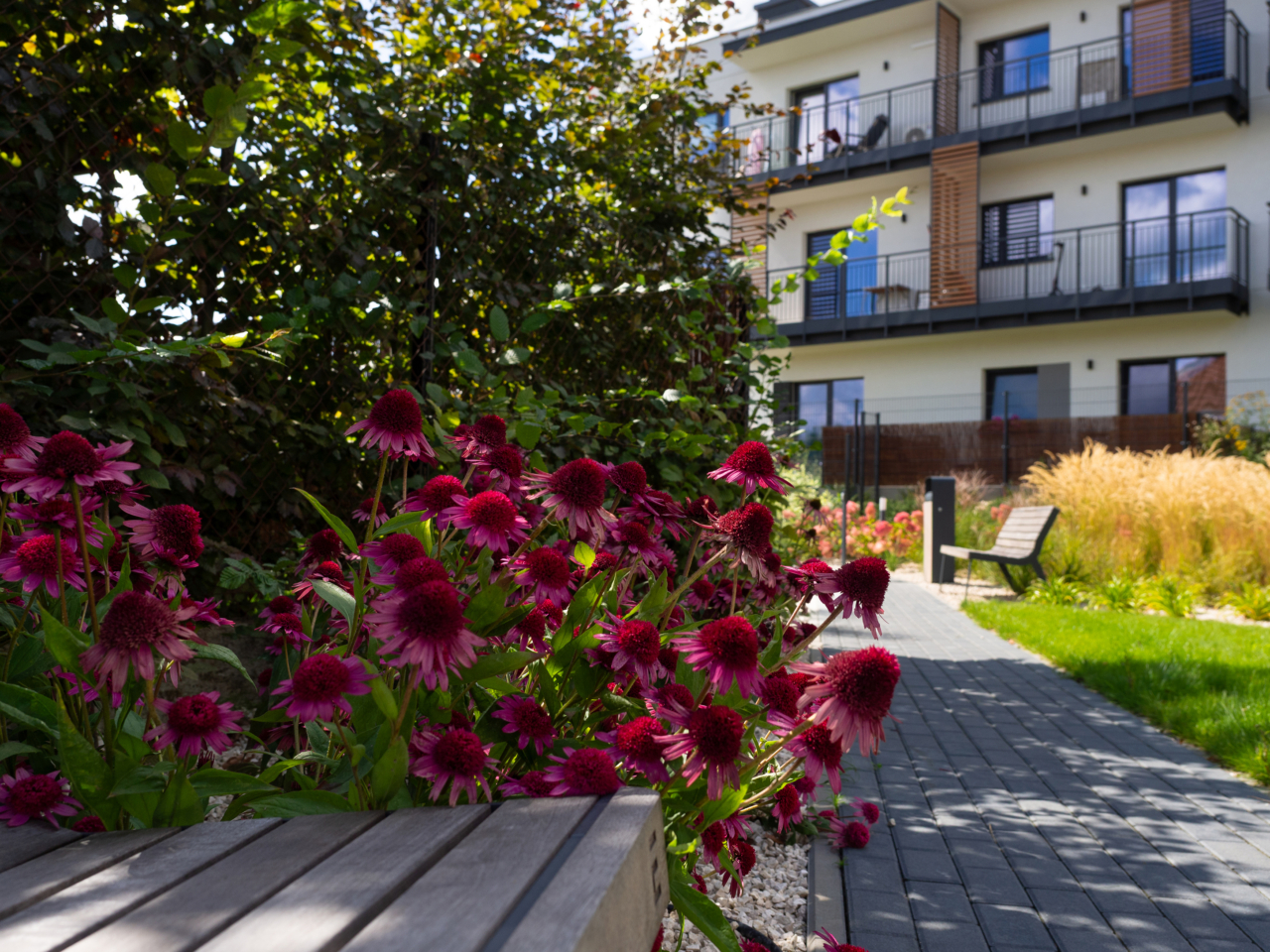
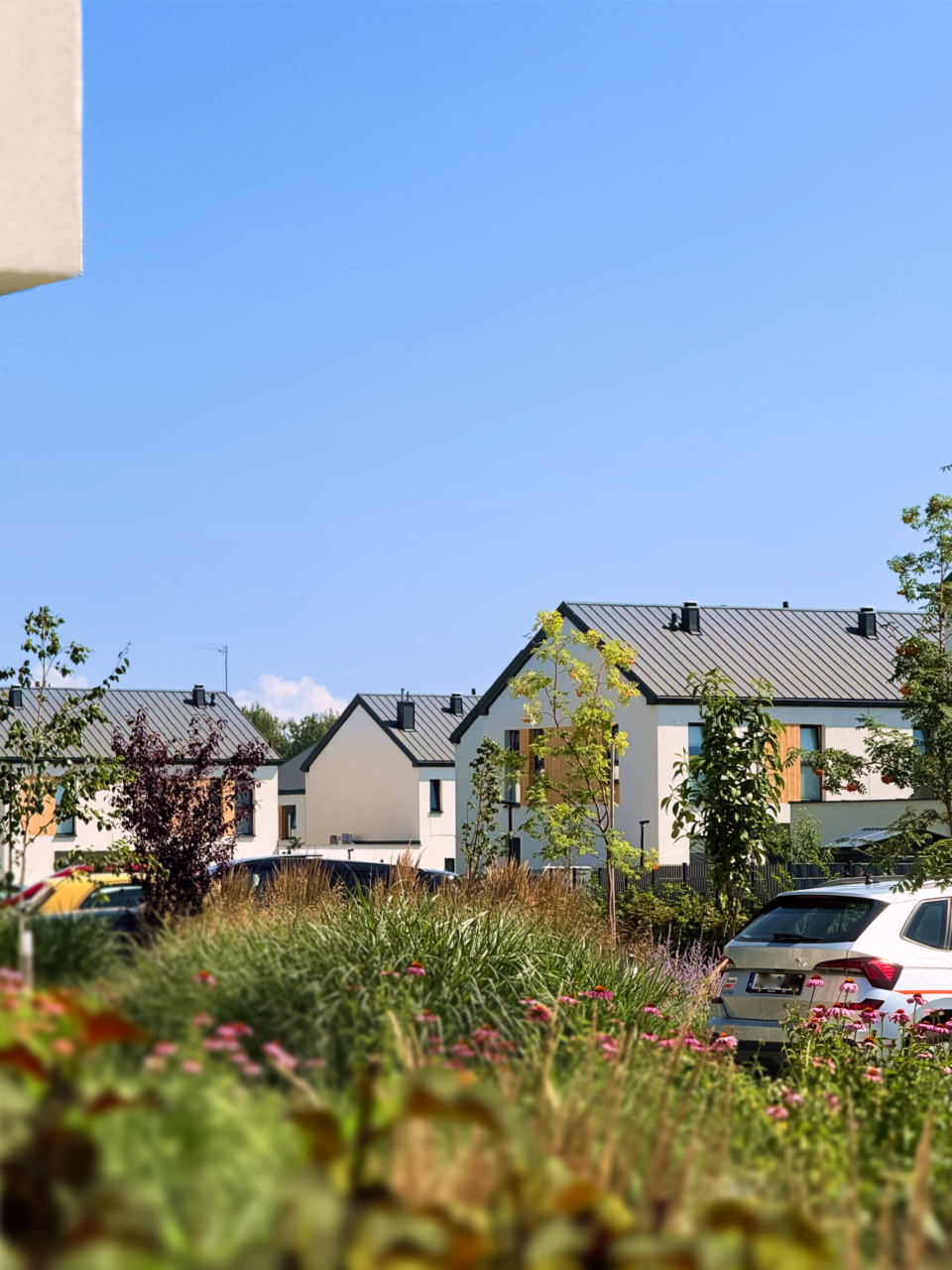
Agnieszka: I always think about the landscape as a whole and how it changes throughout the seasons. My goal is to ensure that the estate doesn’t lose its appeal once the first flowers have faded. That’s why I select species and varieties that provide year-round interest through blossoms, colourful foliage, berries, distinctive forms and attractive winter structure.
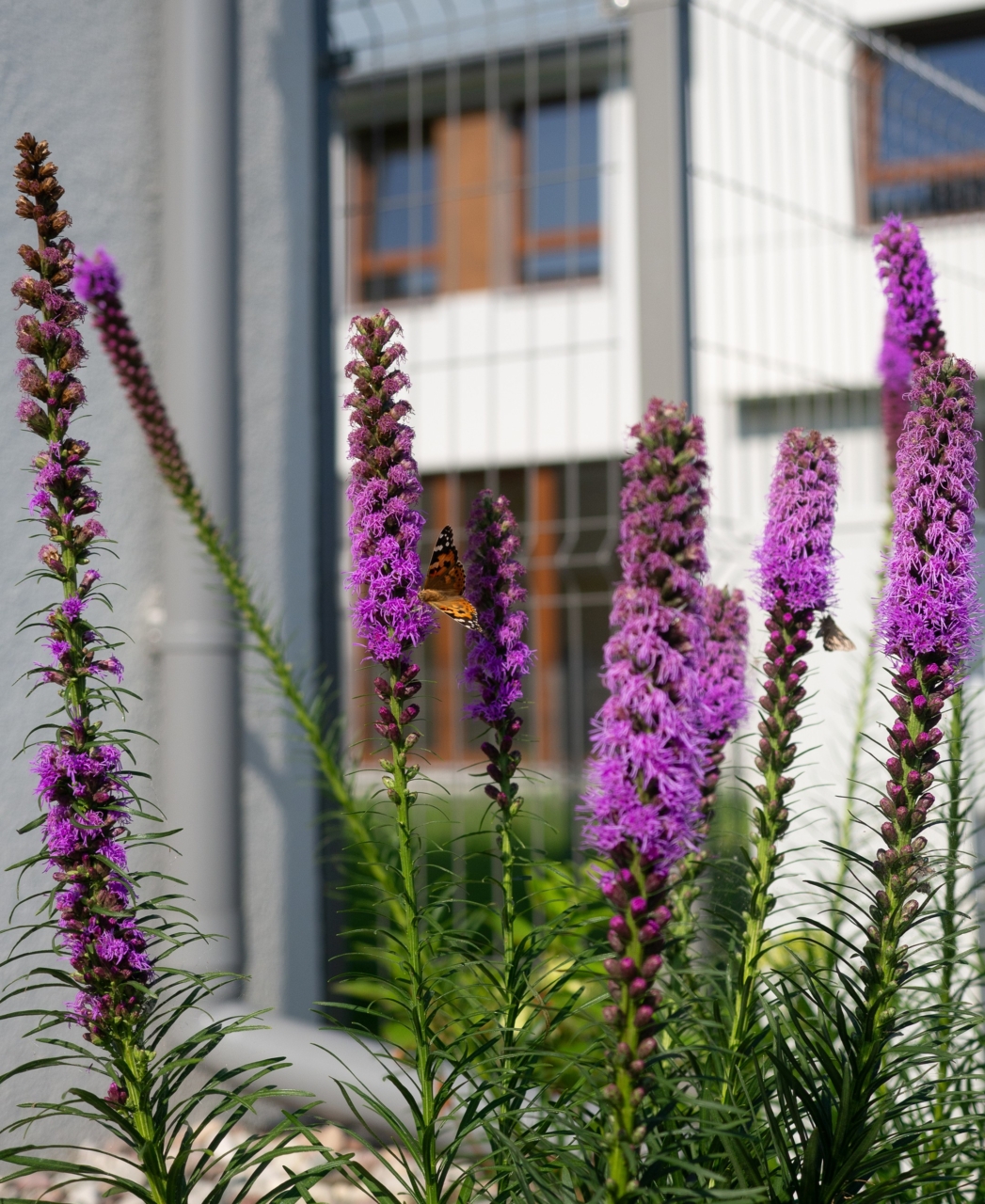
Beyond aesthetics, I also consider biodiversity by choosing plants that support pollinating insects and birds. I like creating layered compositions, combining trees with shrubs, ornamental grasses and perennial plants.
I combine beauty with practicality, taking into account growing conditions, mature plant size, seasonality and long-term maintenance requirements. As a result, the greenery remains attractive not only on the day the development is completed, but for many years afterwards.
Here’s a quick overview of how we approach plant selection across our residential estates:
| Criteria | How we approach it |
| Seasonality | Plants are selected to keep the estate attractive in spring, summer, autumn and winter. |
| Layered composition | Trees + shrubs + ornamental grasses + perennials instead of a single planting layer. |
| Biodiversity | Species that support pollinating insects and birds. |
| Mature size | Plants chosen for how they will look in 5, 10 or even 20 years—not just on day one. |
| Maintenance | Species suited to realistic maintenance requirements without excessive care. |
| Privacy | Hedges planted along shared spaces and private gardens gradually create natural privacy screens. |
What happens to the greenery after the estate is completed?
Agnieszka: Completing the project is not the end of the process. Newly planted greenery needs time to establish and grow, which is why proper care during the initial growth period is so important. Regular maintenance helps the plants achieve the intended effect and stay healthy.
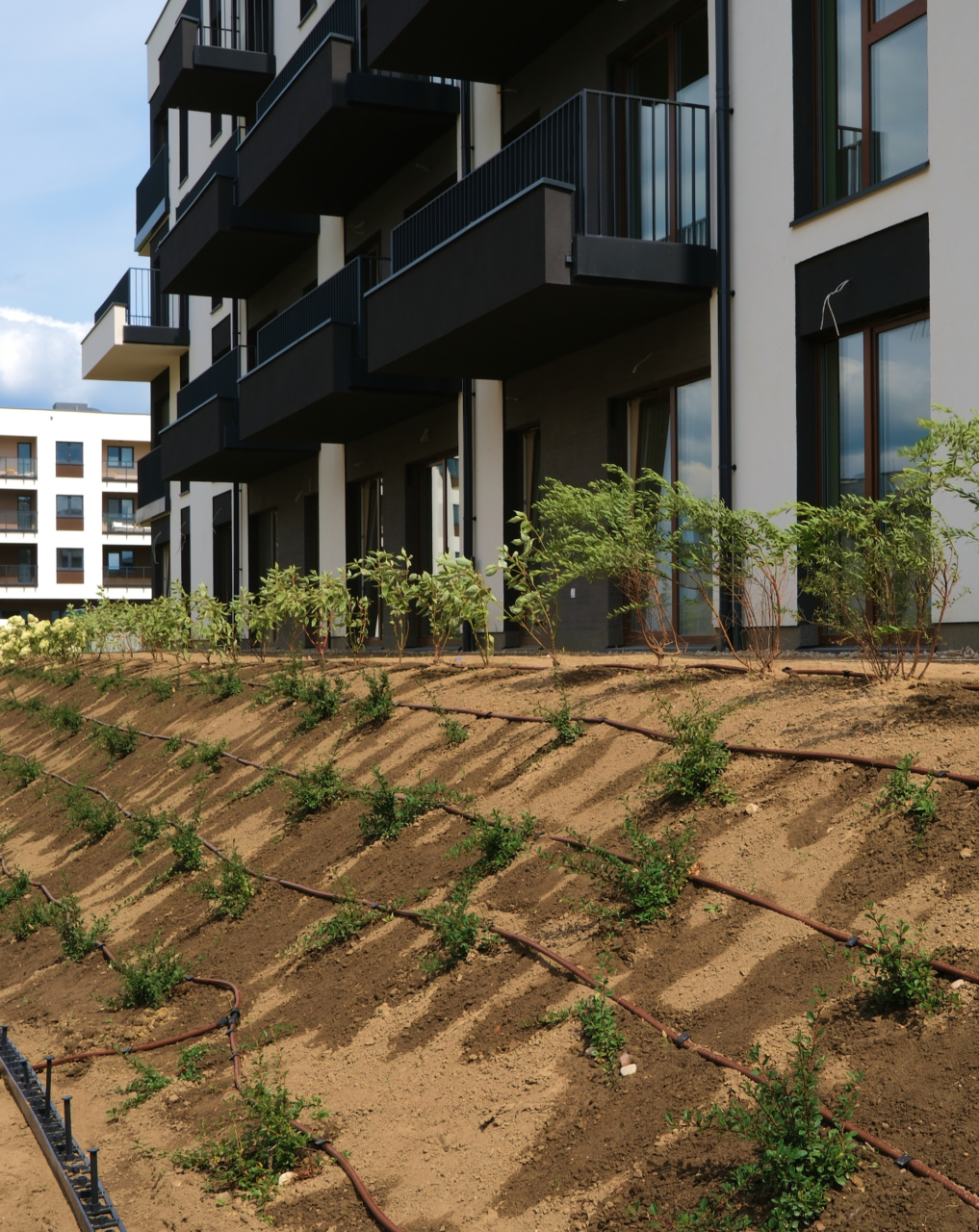
For some time now, we have been introducing automatic irrigation systems for shared green areas across our estates. This makes it easier for residents to maintain the greenery later on and helps plants cope with increasingly challenging weather conditions. It’s worth remembering that greenery on a residential estate is a long-term investment—its value grows over time.
We take a different approach to lawns. Here, we want residents to enjoy the result immediately after completion, which is why, whenever possible, we use ready-made turf. I know how important lawns are to everyday life on a residential estate, and I don’t want you to have to wait before you can enjoy them.
Ongoing observation is also important. I check how the designed greenery functions once it becomes part of the estate, which solutions are worth repeating in future projects and which ones would benefit from modification.
About privacy, benches and community spaces
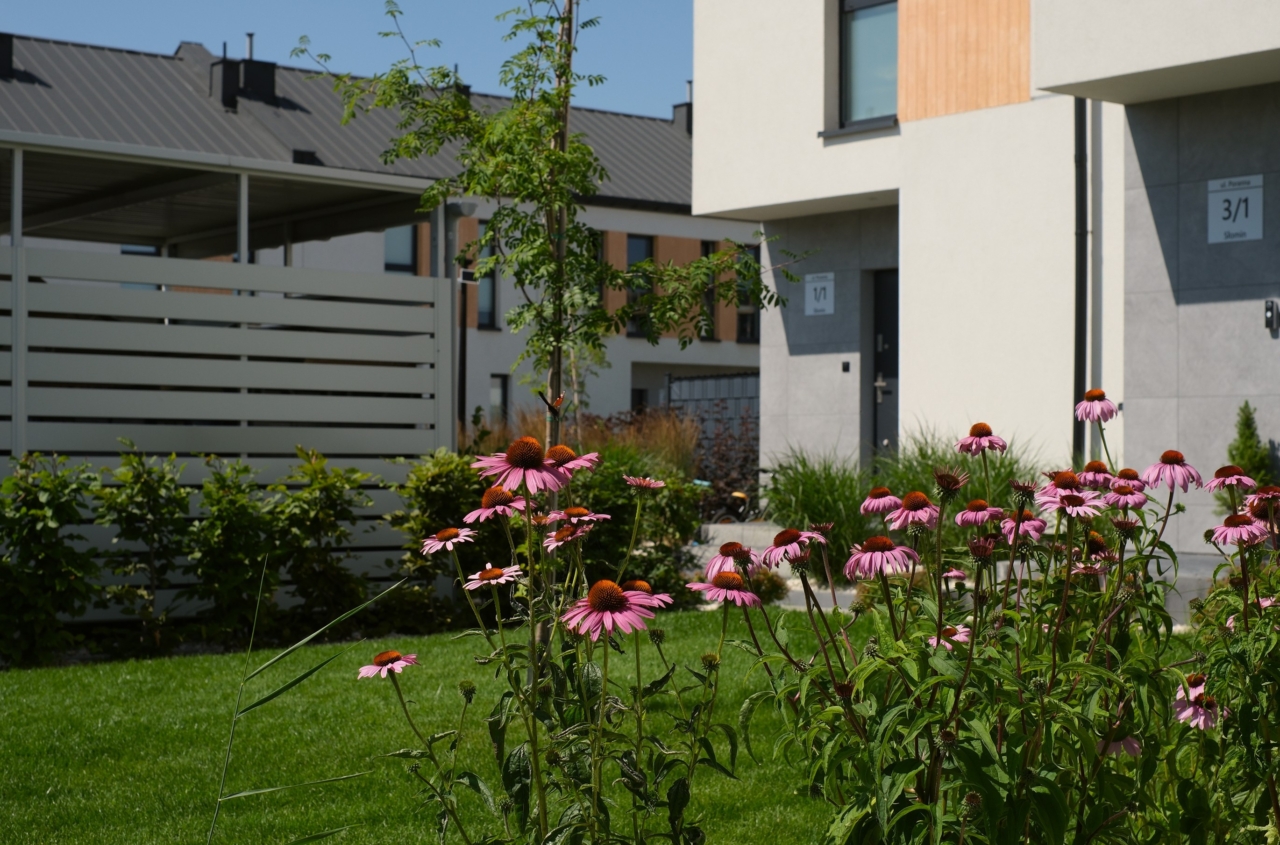
Agnieszka: Protecting residents’ privacy is very important to me when designing our estates. That’s why, in shared areas along private gardens, I introduce hedge planting that gradually creates a natural screen and protects residents’ privacy.
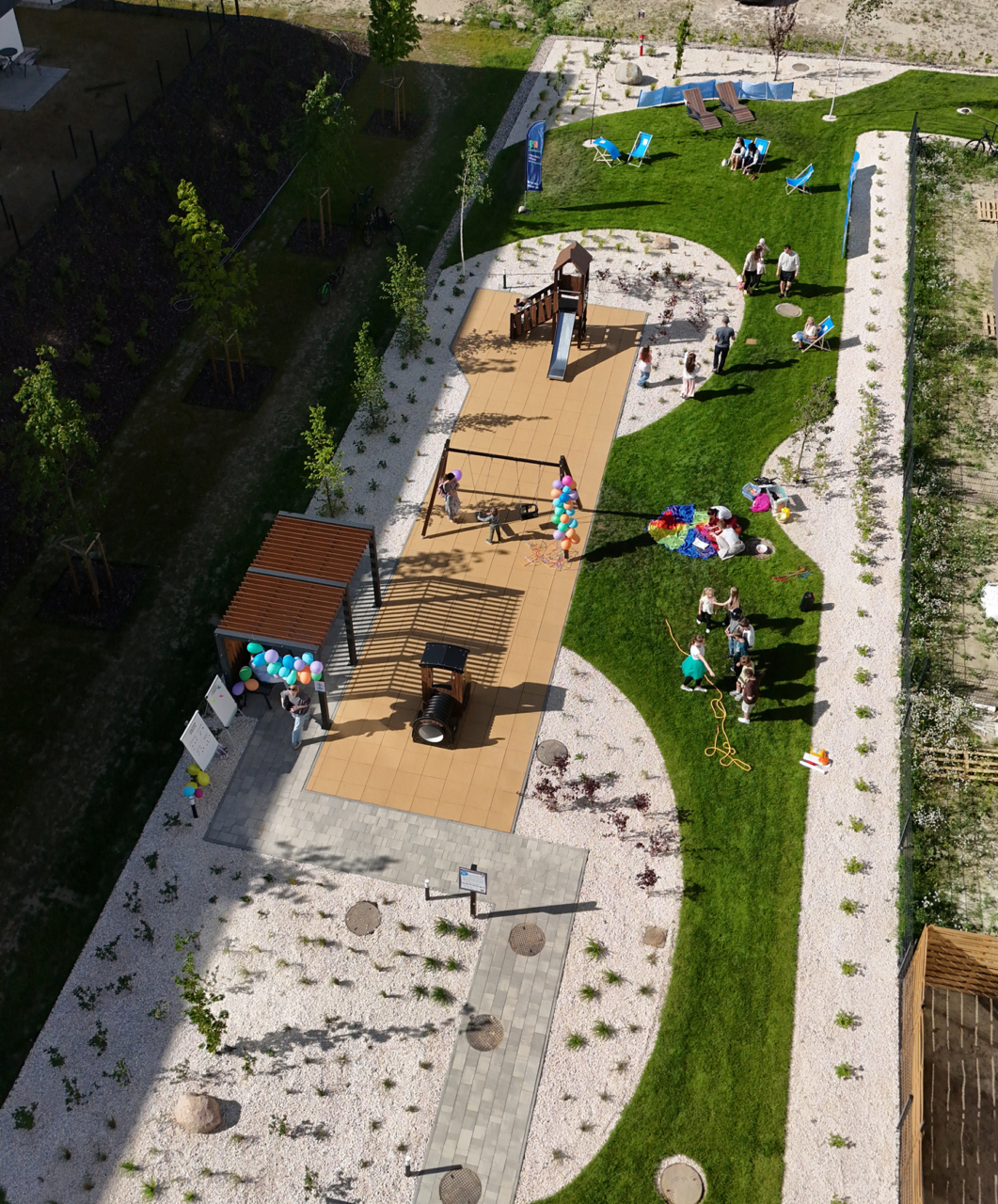
In addition to greenery, whenever the layout of the estate allows for it, I also introduce small architectural features—benches, bins, bicycle racks, loungers, pergolas and playgrounds. Besides providing opportunities for relaxation and recreation, these elements also help build stronger relationships between neighbours.
Editorial team: This approach is appreciated not only by residents but also by independent competitions. Our Miasto Ogród 6 estate in Ożarów Mazowiecki was recognised in the Szczęśliwe Sąsiedztwa competition, organised by Otodom in cooperation with PZFD and Milka, specifically for spaces that encourage neighbours to connect and build relationships. See the photo gallery from Sąsiadówka 2026, which we organised together with residents to celebrate the occasion.
Greenery on a residential estate – what to look for when choosing a developer
The conversation with Agnieszka highlights something that is often overlooked when viewing visualisations: greenery on a residential estate is a process, not a one-off purchase of plants from a wholesale nursery. If you are currently looking for an apartment or house with a garden, it’s worth asking the developer a few specific questions:
- Is the greenery designed by someone with a landscape architecture background, or is it simply an “add-on” provided by the landscaping contractor?
- Is the landscape design developed alongside the building design, or only after construction has been completed?
- Does the estate have an irrigation system for shared green areas, or are all maintenance responsibilities left to you and the residents’ association?
- Are the plants selected to look attractive throughout the year, or are they simply chosen to look good “for the photo” on handover day?
At Novisa Development, our answer to these questions is “yes”—and we are happy to say so openly, because we know that these are precisely the details that distinguish an estate where people genuinely enjoy living from one that only looks good in visualisations.
Summary
Greenery on a residential estate is much more than a backdrop for photos in a sales brochure. It is the everyday space where you will walk your dog or watch your child play on the playground. That’s why we treat it just as seriously as the building design itself—from the initial site analysis and selecting plants for every season to caring for the greenery after residents receive their keys.
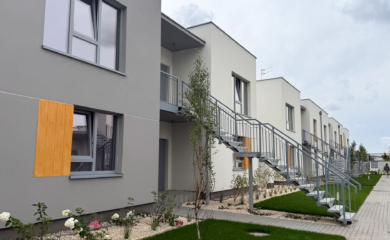
If you are looking for an apartment or house with a garden in Warsaw and the surrounding area, Łódź or the Tri-City area, and you care not only about the interior but also about what happens around your home, take a look at our current developments. We’ll be happy to show you what greenery looks like on estates we have already completed—not in a visualisation, but in real life.
FAQ – most common questions about greenery on residential estates
Initially, right after completion, we take care of the plants – this is when they need the most attention to establish properly. Later, responsibility for maintaining the shared areas usually passes to the residents’ association, which is why we try to make this task easier, for example by installing automatic irrigation systems.
Planting in shared areas and along private gardens is designed centrally so that the entire estate forms a cohesive composition and provides you with privacy. Of course, you can arrange your own garden however you like.
It depends on the method used to establish the lawn. A lawn grown from seed needs time to take root and become dense. We usually use ready-made turf, which means you can enjoy the finished effect practically immediately after completion.
Not always – in fact, this is one of the first elements we analyse even before preparing the building design. Wherever possible, we try to preserve existing trees and incorporate them into the estate design.