
 Polski
  Українська
  Русский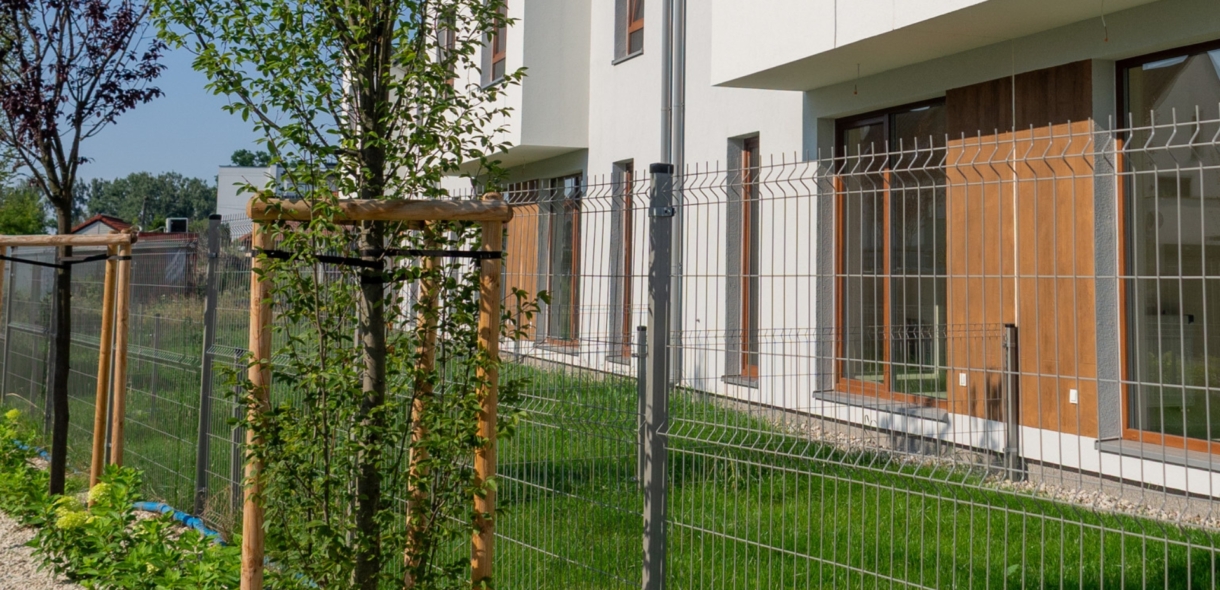
Estimated reading time: 1 minute
You are signing an agreement for your dream home with a garden on a development built by a developer. Everything looks great: the location, the floor area, the layout of the rooms. And suddenly, your eyes stop at the sentence: “a share in the land with the exclusive right to use the adjacent green area.” Your heart skips a beat. What does this actually mean? Will your neighbour be able to enter your garden? Is this even “your” plot?
Don’t worry – this is a completely normal, very common and well-established way of arranging housing developments with gardens, including our own. In this article, we break the topic down into its essential elements so that, after reading it, all you are left with is peace of mind and the desire to arrange your garden your way.
Table of contents:
What exactly does the exclusive right to use mean?
Let’s start with the most important point: the garden you purchase together with your home is yours to use exclusively. This means that:
- only you (and your household members or guests) can use it,
- your neighbour has no right to enter your area, have a barbecue there or store anything there,
- you cannot enter your neighbour’s garden either.
Formally speaking, the entire plot of land under the development is jointly owned by all residents (exactly as in a traditional apartment building, where the land under the building is also owned by all apartment owners). Under a special agreement, which lawyers call a quoad usum agreement, specific parts of this jointly owned plot are assigned to individual homeowners for their exclusive use. Your garden is exactly such a section, assigned exclusively to your home.
It may sound somewhat formal, but in practice it comes down to a simple rule: this is your space, you decide what happens there, and no one else has the right to enter it.
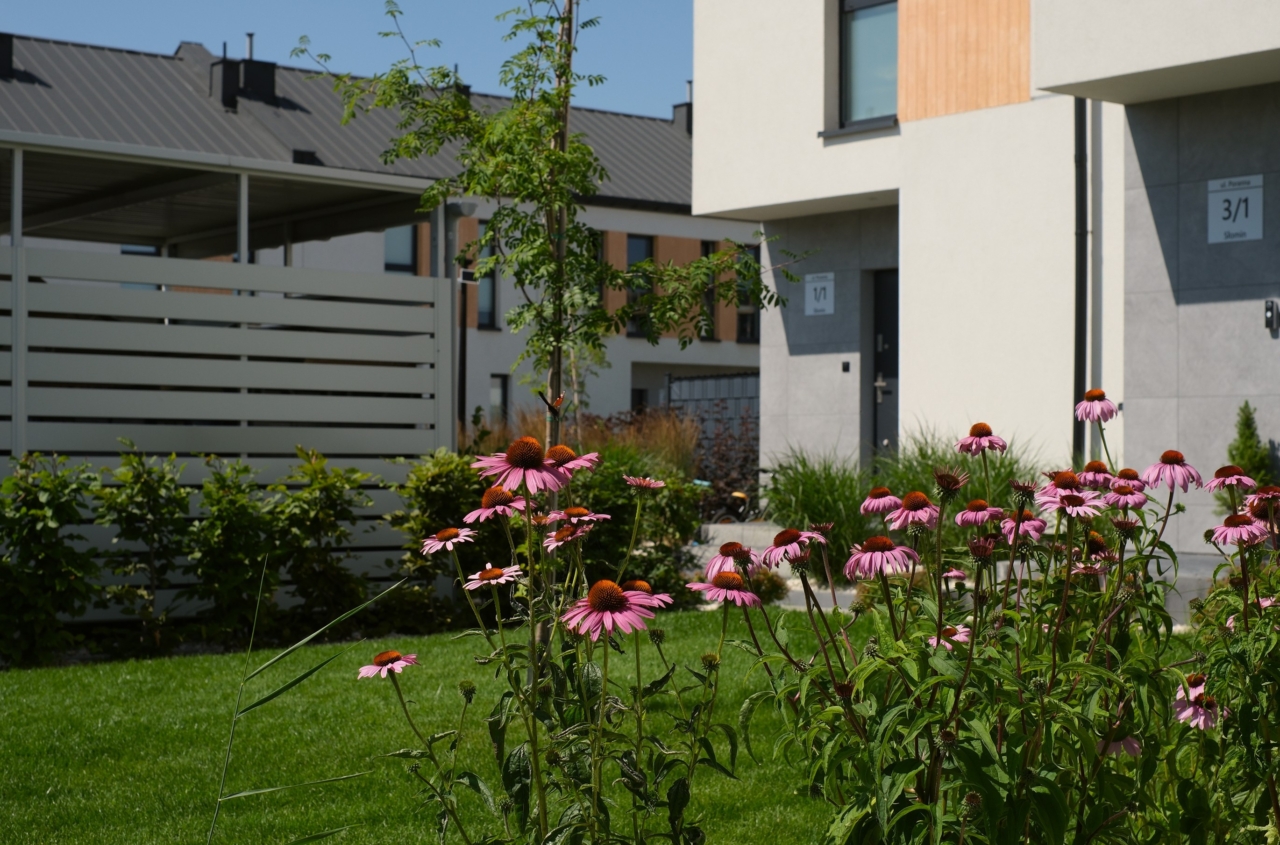
The exclusive right to use in the agreement
You may be wondering why you simply cannot buy the garden “as your own property”, just as you would buy a separate plot of land. The answer is very practical and results from the way the entire development is designed. Shared utility systems run underneath the gardens. For example, the rainwater drainage system. In the event of a failure, the technical team needs access to these systems, regardless of whose garden it formally is. The development works as one organism. Paths, fencing, lighting, drainage systems – all of these elements are interconnected. Every resident, as a co-owner of the land, shares responsibility for keeping them in good condition. This means that repair and maintenance costs are shared fairly among all residents (most often as part of the service charge), rather than falling entirely on one person, even if the failure happens to occur “under their garden”.
In other words, this solution protects you from unexpected, major infrastructure repair costs while giving you a fully private space for everyday use.
What you can and cannot do in your garden
This is a question we hear very often as a developer. The good news is that you can do a lot in a garden with the exclusive right to use. You simply need to remember what is happening underground.
You can freely:
- plant a lawn, flowers, a vegetable garden or herbs,
- put up a swing, trampoline or garden gazebo,
- create a terrace, a space for sun loungers or a barbecue area,
- put up a small greenhouse or plant boxes,
- enclose the area with a low hedge or fence (in accordance with the development regulations).
It is best to avoid (or consult the developer/homeowners’ association first):
- planting large trees and shrubs with extensive root systems, as they may damage underground utilities,
- digging a pond,
- putting up buildings on permanent foundations (e.g. a brick garage or a large gazebo on a foundation).
| What you do | Can you? |
| Lawn, flowers, vegetable garden | Yes |
| Swing, trampoline, hammock | Yes |
| Terrace, barbecue area | Yes |
| Small greenhouse, planting boxes | Yes |
| Large tree with an extensive root system | Consult first |
| Garden pond | Consult first |
| Building on a foundation | Consult first |
If you have any doubts about a particular idea, feel free to ask us before you proceed.
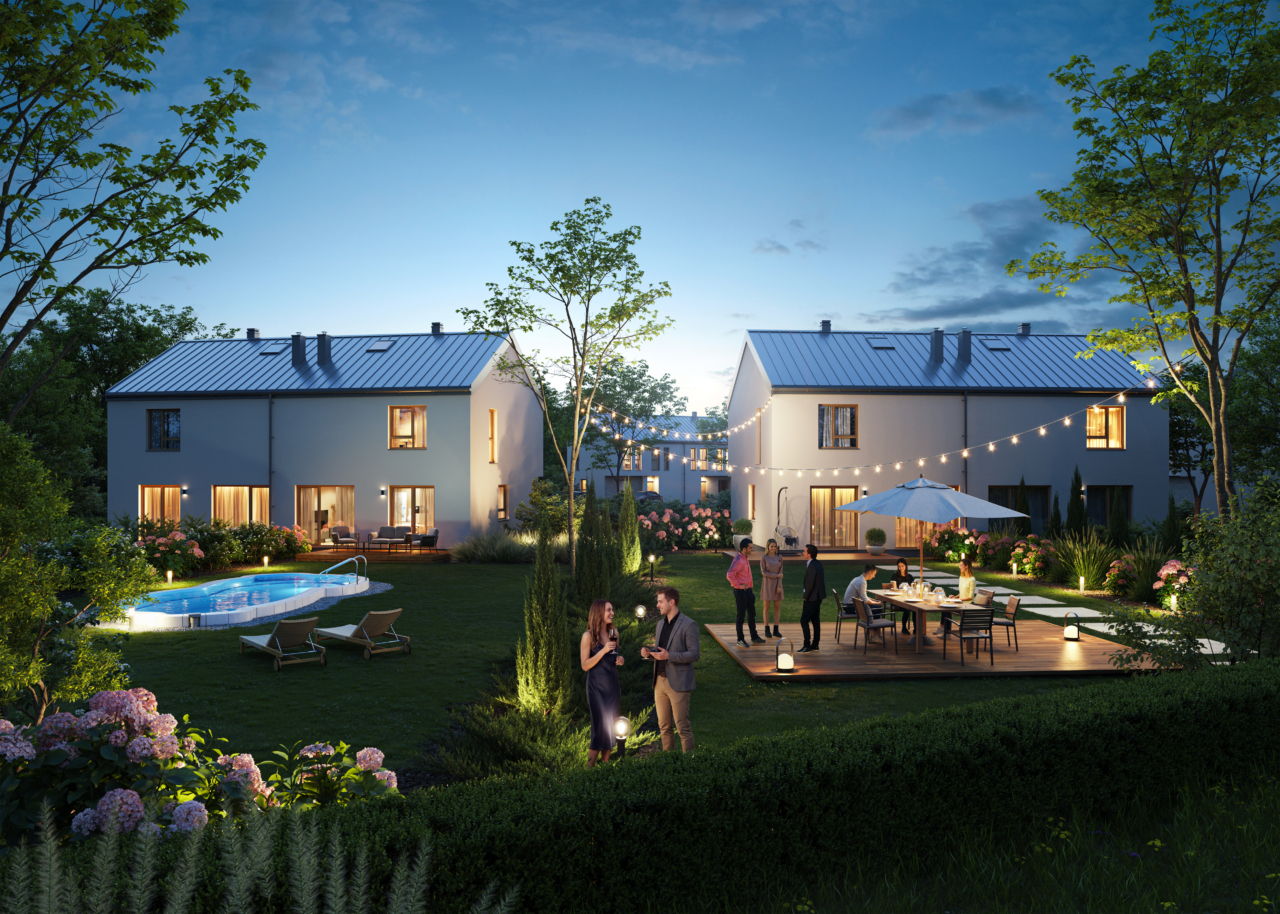
A garden with the exclusive right to use vs. your own plot – comparison
Sometimes future residents wonder: “Would it be better to buy a separate plot and build a house myself?” It’s a fair question, so we will answer honestly: both solutions have their advantages.
| House in a development (shared land + exclusive right to use) | House on your own plot | |
| Who takes care of external utilities | Homeowners’ association / developer (costs are shared) | You independently |
| Infrastructure failure costs | Shared proportionally among residents | Fully your responsibility |
| Freedom in arranging the area | High, with certain restrictions (foundations, trees) | Full (within the limits of building regulations) |
| Garden privacy | Guaranteed by the agreement, neighbours have no access | Guaranteed by ownership |
| Sense of community and development security | Yes, as in a well-managed homeowners’ association | Depends on the area |
| Formalities when buying | Simpler, one notarial deed with the developer | Usually more stages (plot + construction) |
There is no single right answer here, because it depends on what matters more to you: complete independence or the comfort of living in a community where a large part of the technical responsibilities is simply shared among everyone.
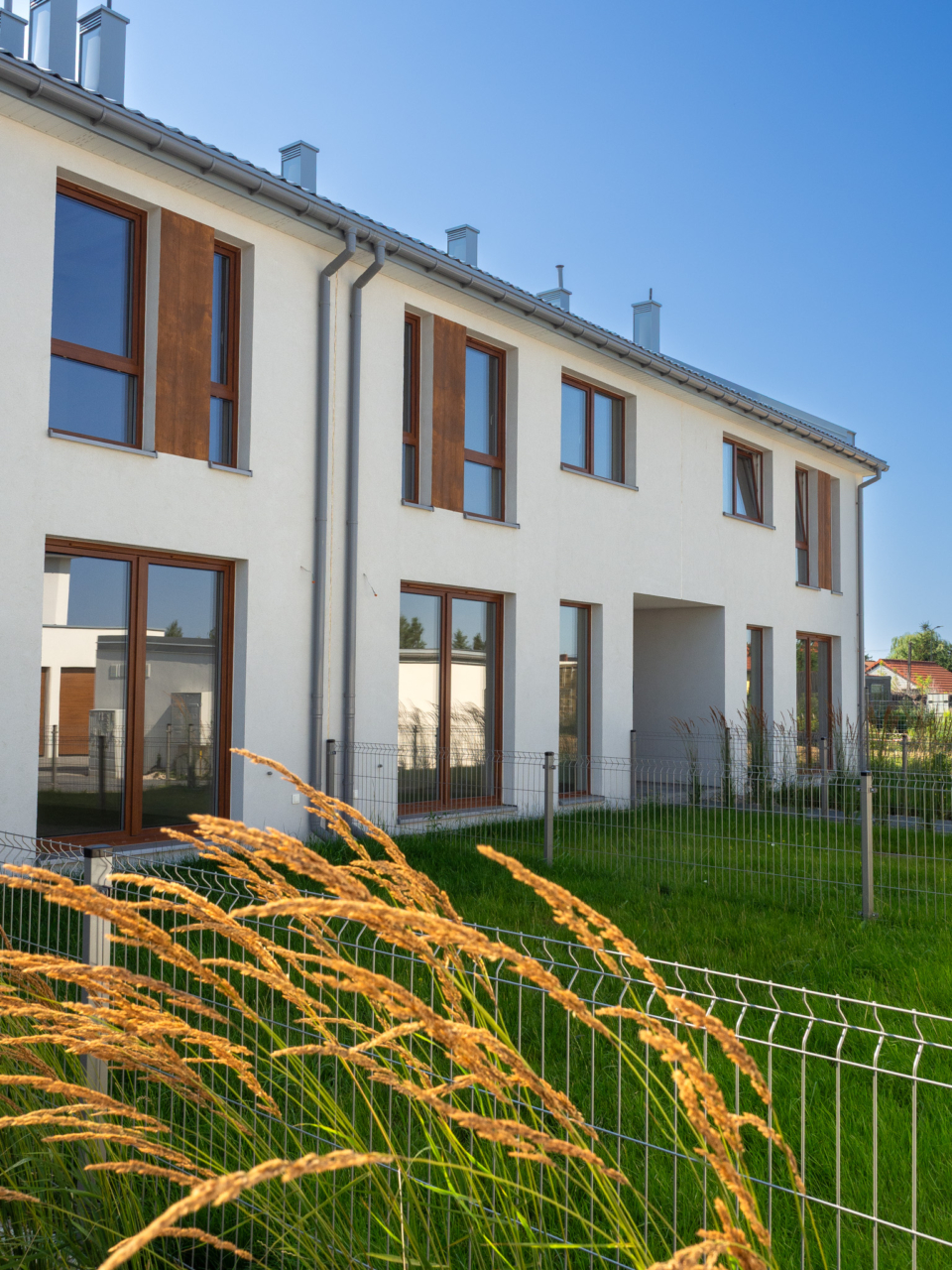
Does a garden with the exclusive right to use make sense?
We know that legal language in an agreement can sound serious, but in practice this is a solution that works to your advantage:
- You have complete privacy. Your garden is exclusively yours, just as if you owned it outright in your everyday use.
- You don’t have to worry about large, unexpected costs of repairing underground infrastructure. This is the responsibility of the homeowners’ association, not your personal responsibility.
- The development as a whole works more efficiently. Consistent rules concerning greenery and development help the entire area look attractive and retain its value for years.
- You know exactly where you stand from day one and what you are entitled to, without any ambiguity.
In short: this is not a “restriction”, but a proven, convenient model used in housing developments with gardens throughout Poland – and one that has worked well for us at Novisa Development for years.
We hope that after reading this article, the provision concerning the “exclusive right to use” no longer raises any concerns. You now know what it really means: a guarantee of your private space, without unnecessary risk on your side.
If you are looking for a house with a garden near Warsaw, in Łódź or the Tri-City area and have questions about a specific Novisa development – get in touch with us or speak to one of our sales representatives. We will be happy to answer all your questions before you sign the agreement.
FAQ – frequently asked questions
No. The exclusive right to use means that only you have the right to be on and use this area. The same applies the other way around: you cannot enter your neighbour’s garden.
Yes. The exclusive right to use a specific part of the land is connected with your property and passes to the next owner together with it when the property is sold.
There is no separate “garden fee”. Ongoing maintenance costs for common areas (including infrastructure under the gardens) are settled as part of the homeowners’ association service charge, just as in any multi-unit property.
Yes, in accordance with the rules applicable on the development (e.g. a low fence or hedge), so that the entire development maintains a consistent and attractive appearance.
Not at all. This is standard practice in terraced and semi-detached housing developments throughout Poland, used specifically to balance your privacy with the safety of shared infrastructure.