
 Polski
  Українська
  Русский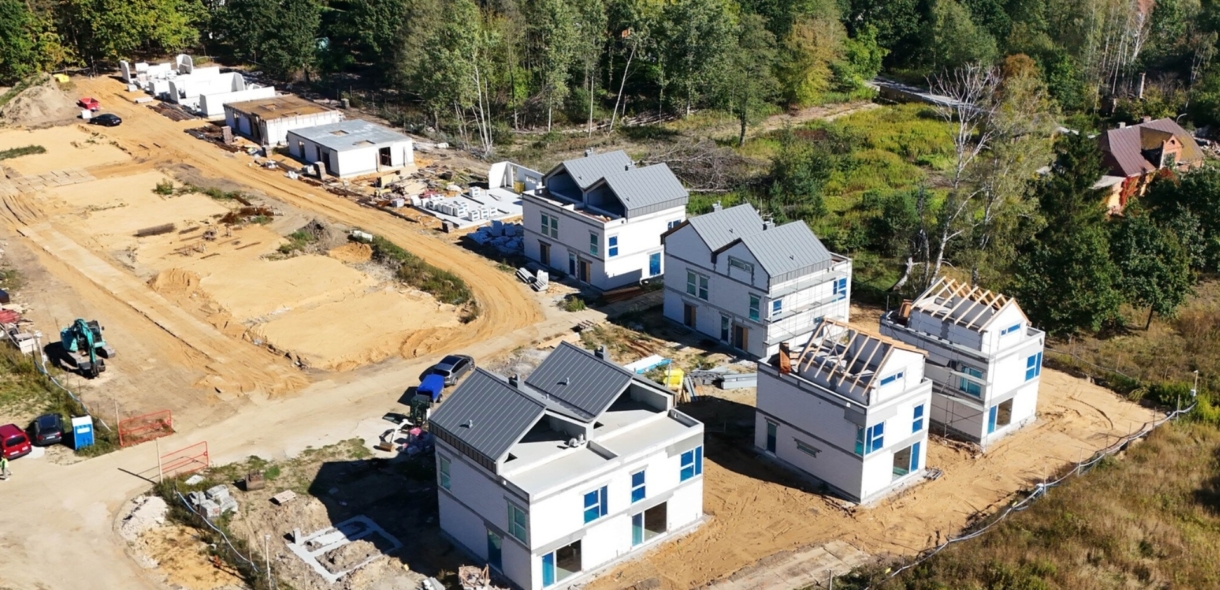
Estimated reading time: 8 minutes
Are you looking for a house or apartment on the primary market? Do you want to buy a property directly from a developer? You have probably encountered a situation where the property is sold while construction is still in progress – when the estate is at the stage of foundations, walls, roofs, or façades.
In this article, we explain step by step what the construction of a developer housing estate looks like, what individual milestones mean, after which you pay the next loan installment. You will also learn what to pay attention to, who is worth trusting, and how to verify a developer before purchase. We will help you understand the entire process behind the scenes and gain confidence that you are choosing a safe and proven solution for yourself and your family.
Table of contents
1. Why does a developer start selling houses during construction?
A developer who has built a strong reputation and customer trust over the years very often starts sales while construction is still ongoing. This is a standard practice in the real estate market – and importantly, safe for buyers. Why? Because the investment is carefully planned, formally prepared, and financially secured before the first works even begin.
The natural question is: how is the client protected in such a situation?
A key role is played by an escrow account. This is a special bank account assigned to a specific development. Buyers transfer funds to it according to the schedule specified in the developer agreement, but the money does not go directly to the developer. The bank releases funds only after confirming the completion of a specific construction stage.
In practice, this means that:
- the client pays in stages, not the full amount upfront
- the bank monitors construction progress
- the developer receives funds only after completing a specific scope of work
This system works both ways – it protects buyers and motivates the contractor to complete the project on time. The construction schedule and payment schedule are closely linked.
Simply put: first progress, then payment. What happens next? Since fund disbursements depend on construction progress, it is worth knowing exactly what this process looks like step by step. In the next section, we show what housing estate construction looks like at Novisa Development and what the individual stages and milestones mean, determining the transition to the next phase of the project.
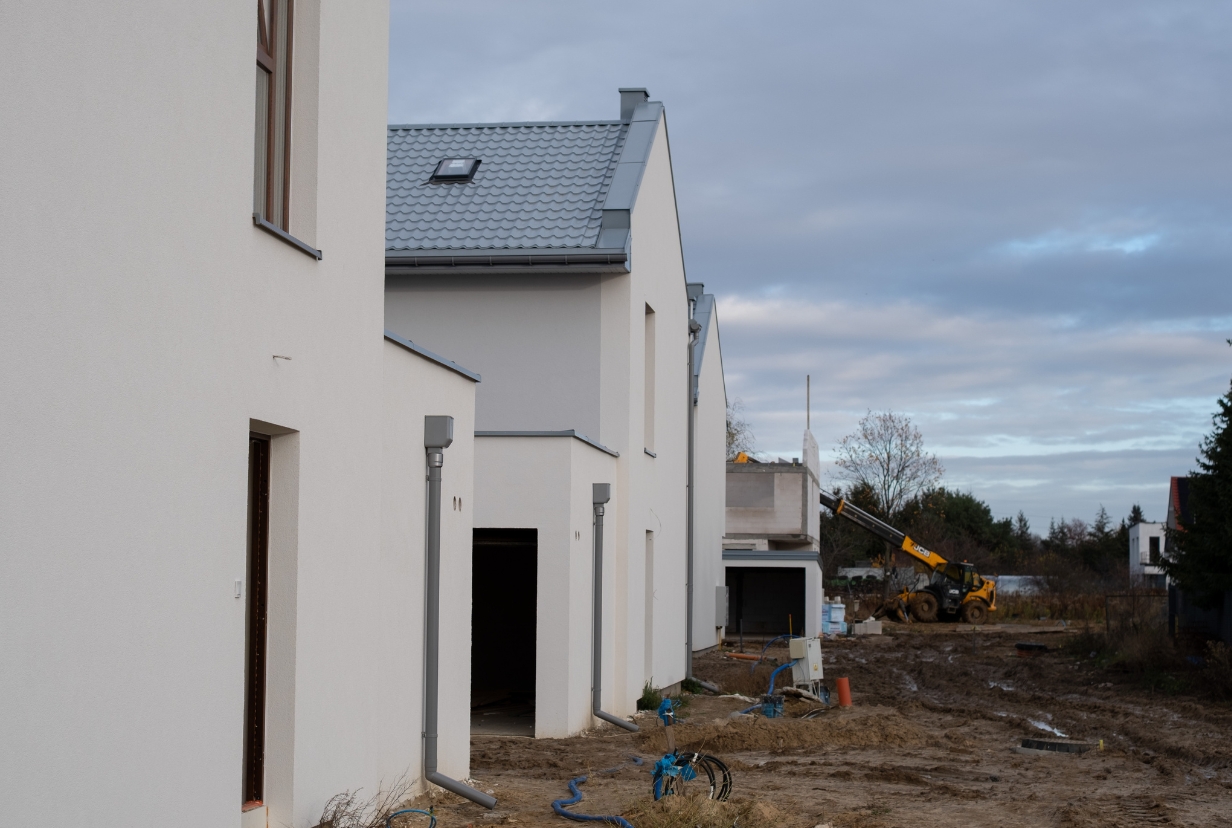
2. What are the stages of developer housing estate construction?
2.1. Construction organization and site preparation
At the beginning, the construction site facilities are created. The area is fenced, organized, and divided into work zones. Temporary roads, equipment areas, and technical facilities are designated.
This is a crucial moment – people work on site with heavy materials, excavators, and cranes, so everything must be prepared in accordance with safety regulations. An example of a project at this stage is Wille Stolema w Gdańsku – an intimate estate of houses with gardens.
2.2. Foundations
At this stage, real progress is already visible. Excavations, backfills, and foundation slabs are created – the base for future homes. You can see the exact layout of buildings and internal roads.
Large developments such as Arkady Walendów are carried out in stages – foundations may be built in one part, while further works continue in another.
2.3. Building structure
This is the moment when walls and floors rise from the ground. Buildings become visible from the street and take on a real shape. At this stage, for example, is osiedle Domy na Witosa – the shapes of semi-detached houses are clearly outlined, although they do not yet have roofs or windows.
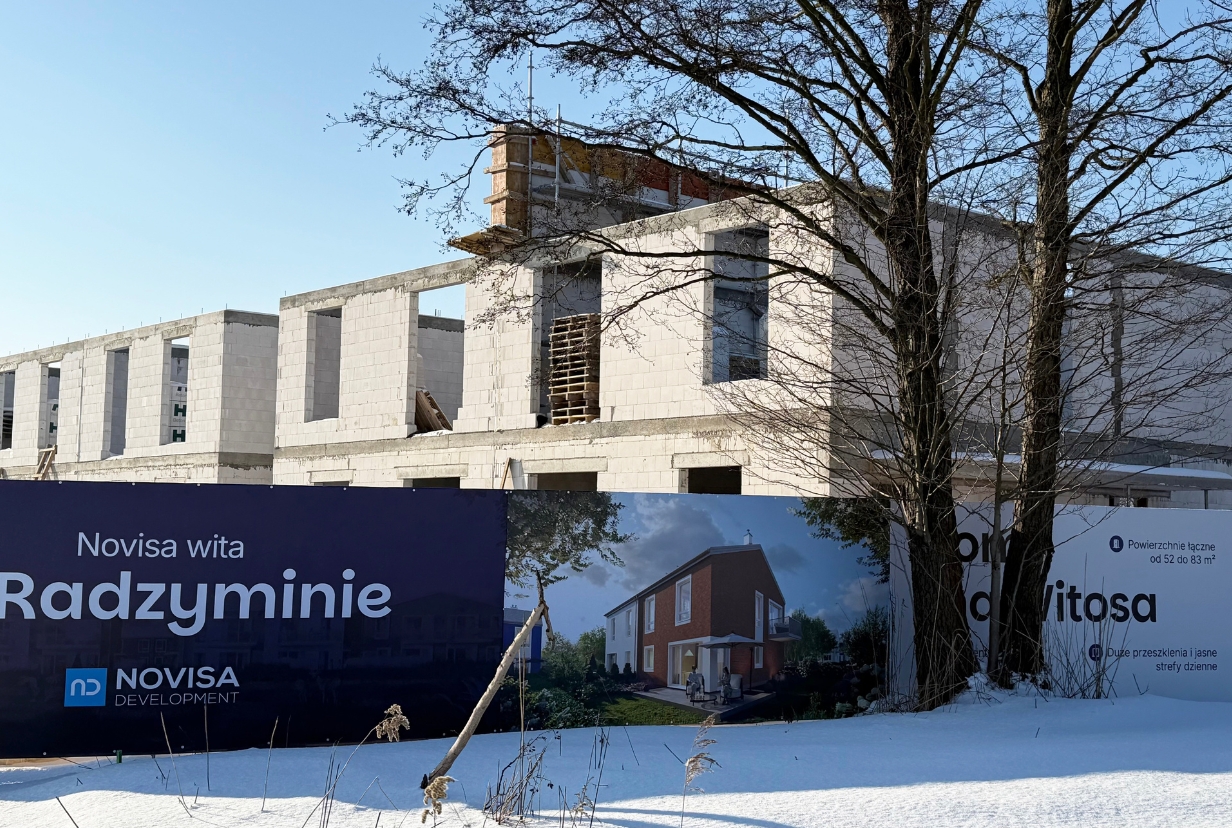
2.4. Roofs and partition walls
Roofs, chimneys, and walls separating rooms appear. It becomes increasingly easy to imagine your future home. Some buildings at Osiedlu Słonecznym w Sulejówku are currently at this stage.
2.5. Closing the building shell and interior works
After installing windows and completing roofing works, buildings are protected from weather conditions. Inside, installations and plastering are carried out. Outside, façades begin – the estate gains character and increasingly resembles visualizations.
2.6. Finishing works and external area
This is the stage of final touches:
- installation of electrical systems and fittings
- pouring screeds
- development of common areas
This is where the landscape architect steps in. Greenery in our estates is never accidental – the selection of trees, shrubs, and plants is an important design element that affects residents’ comfort of living.
At Manufaktura Marki 2, such final works are currently underway – we are preparing the estate for handover.
2.7. Occupancy permit
This is the most anticipated moment. Construction is officially completed, inspection authorities verify the project, and the units receive an occupancy permit. From this moment, owners can enter their apartments, begin finishing works, and plan their move.
Ready houses and apartments are currently available, among others, at:
- osiedlu Zielono Mi – last house ready for handover
- osiedlu Miasto Ogród 6 – last two ground-floor apartments with a garden
- Osiedlu Natura in the Lesznowola municipality – apartment over 55 m², only 4 km from the Warsaw border
- Osiedlu Młodych w Janczewicach – 3-room apartments with two parking spaces, just outside Warsaw
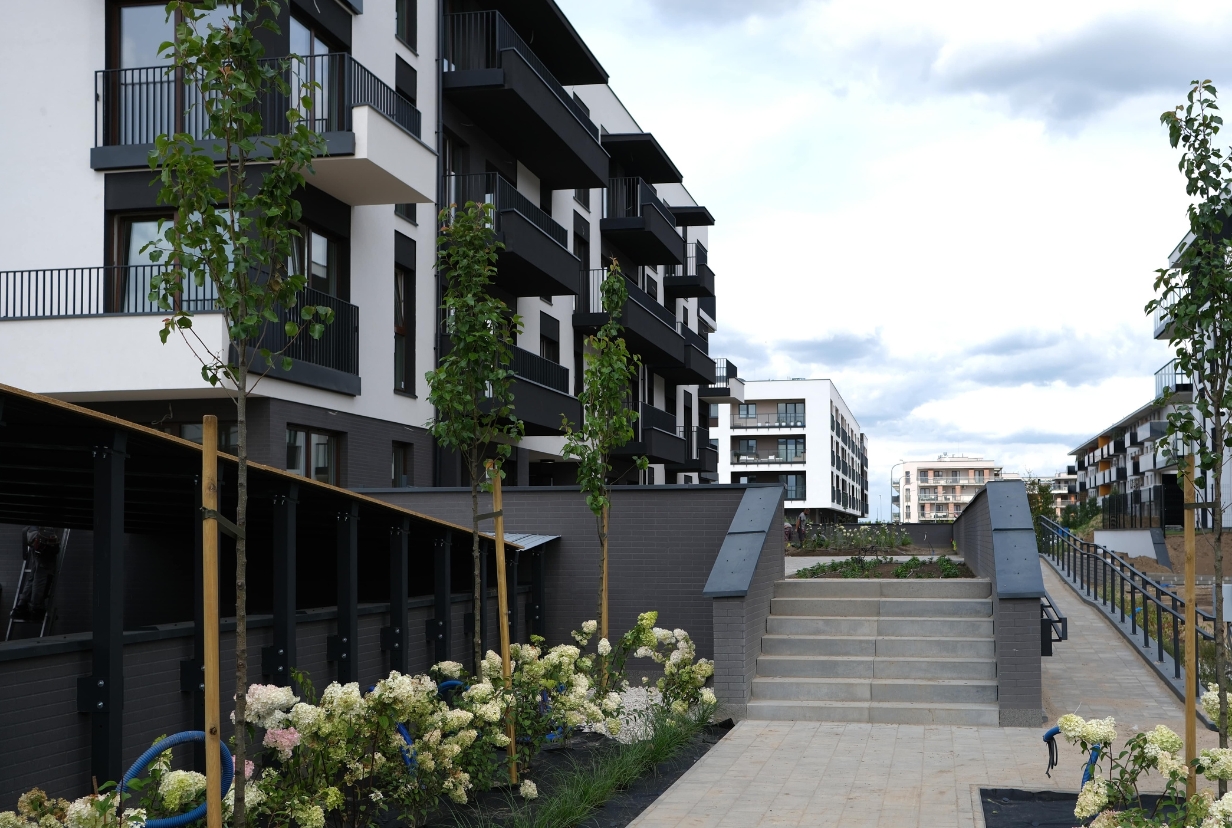
3. How long does it take to build a housing estate?
We already know what developer housing estate construction looks like and its individual stages – but how long does it all take? On average, the entire process lasts from 15 to 24 months, depending on the size of the development, the number of buildings, and the construction technology. Large estates such as Nova Magdalenka 7 are built in stages, allowing the first residents to move in sooner.
4. How to verify a developer before purchase?
4.1. Completed developments
The best way is to check what the developer has already built. Experience truly matters – a company that has operated on the market for years and completed many developments provides much greater security than a company recently established only to sell a few units. The longer the presence on the market and the more completed estates, the greater the certainty that the project will be completed according to plan.
It is worth seeing previous projects in person and paying attention not only to the buildings themselves but also to the surroundings. Good developers take care of common area development, landscape design, sidewalks, lighting, or playgrounds. These elements improve residents’ quality of life but also generate additional investment costs – which is why smaller, less experienced investors often limit them or leave them to residents to organize.
4.2. Opinions about the developer and their communication style
Another important factor is reviews. Check comments from residents of completed estates, online reviews, and information about the sales office. Pay attention not only to ratings but also to how the developer responds to customer feedback – whether they reply substantively and specifically or avoid contact.
After-sales support is also essential. A professional developer has a warranty service and technical teams that handle residents’ reports. Defects can occur in any development – this is normal. The most important thing is how quickly they are resolved and whether contact with the company is efficient.
A good sign is also transparency. Check whether the developer:
- provides construction updates
- publishes photos and videos of work progress
- informs about subsequent project stages
- maintains order and proper signage at the construction site
These details show the standard of work and project organization. An experienced developer has nothing to hide – on the contrary, they are eager to show how their estates are built.
The simplest rule: check the company’s activity. See where it is present, how it communicates with clients, and whether it answers questions. An active, open developer is usually one who truly cares about buyers’ trust – and that is one of the best signs that it is worth entrusting them with the purchase of your future home.
5. Summary – key points to remember
The creation of a developer investment is a process planned down to the smallest detail. The stages of housing estate construction proceed in the following order: site preparation, foundations, structures, roofs, partition walls, façades, installations, plastering, screeds, and external area development. Buying a house during construction does not mean risk – provided that the project is carried out by a reliable developer who operates transparently and according to schedule.