
 Polski
  Українська
  Русский
Estimated reading time: 9 minute
Do you own a building plot and are considering selling it? The year 2026 may be a turning point for the land market across Poland. This is due to a new planning document called the municipal master plan.
In this article, we explain what will change once the master plan comes into effect. Could selling your land before mid-2026 be the safest option?
Table of Contents
What is a master plan?
The master plan is a new local law act introduced by the amendment to the Spatial Planning and Development Act of July 7, 2023. It replaces the previous Study of Conditions and Directions of Spatial Development (SUiKZP), which was a more general and less binding document.
In practice, this means the master plan:
- defines zones for permitted development (e.g., residential, commercial, industrial),
- designates areas with investment restrictions,
- sets urban standards (including building height, development intensity),
- will serve as the basis for issuing development conditions decisions (WZ).
Municipalities have until June 30, 2026 (with a possible extension to August) to adopt master plans. The problem is that progress is slow – only a small percentage of municipalities have already adopted the new documents.
What does MPZP mean and what is WZ?
For a landowner, two concepts are the most important: MPZP and WZ. They determine whether something can be built on a given plot – and if so, what exactly.
MPZP, or local spatial development plan, is a document adopted by the municipality that specifies the detailed rules for construction in a specific area. It states whether a plot can host a single-family house, semi-detached houses, a multi-family building, a commercial facility, or only farm buildings. It also defines maximum building height, permissible building area, minimum green space, roof slope, and building lines.
If a plot is covered by an MPZP and designated for residential development, its status is the most stable and predictable – for both the owner and potential buyer.
The situation is different if no local plan exists for the area. Then the investor can apply for a development conditions decision, called WZ. This is an individual administrative decision issued by the office, allowing a specific project – for example, building a single-family home with defined parameters. However, WZ is not a general document for the entire area but applies only to the designated plot and a specific construction project.
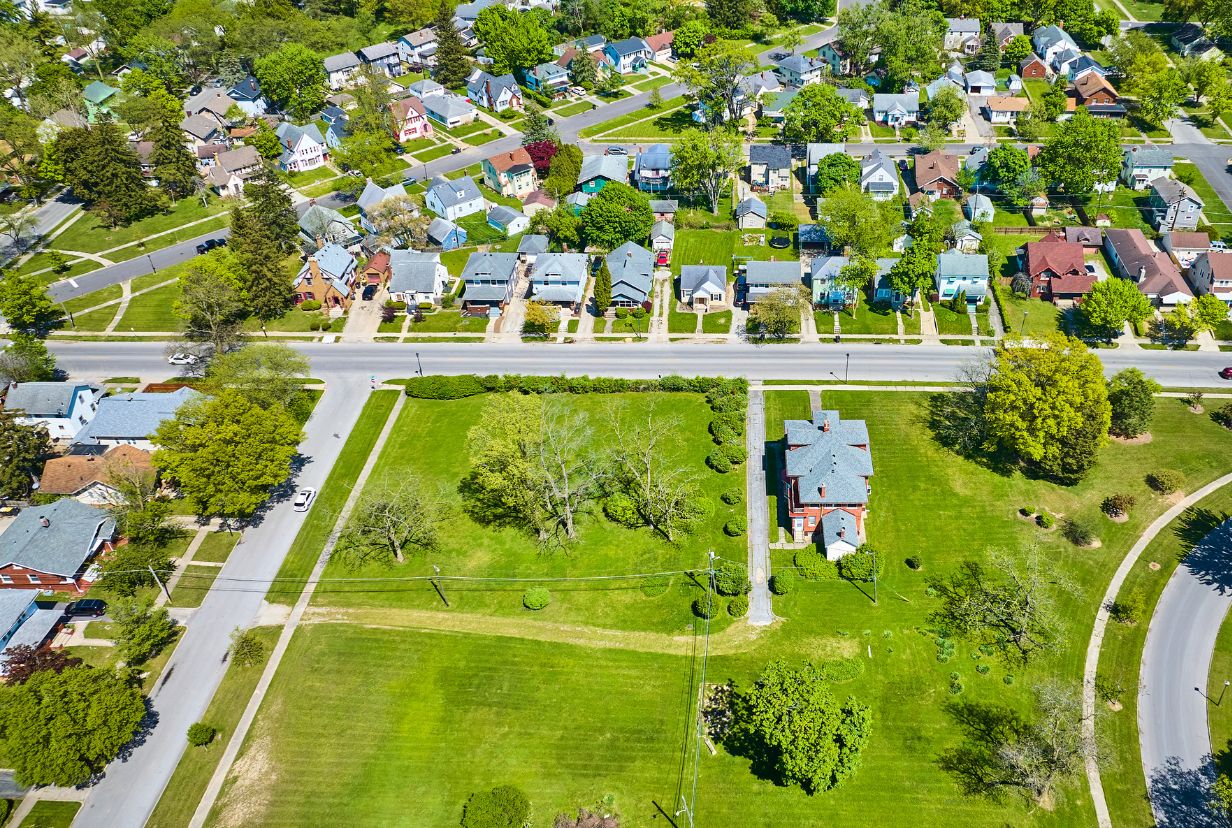
Until now, WZ decisions were often used to convert plots without local plans into investment land. However, once the master plan comes into effect, this situation will change. New development conditions decisions will only be issued in areas designated in the master plan as zones for permitted development. If a plot is not in such a zone, obtaining WZ will not be possible. Its investment potential may be significantly limited.
Areas with investment restrictions – what does it mean in the context of the 2026 master plan?
The master plan, soon to come into effect in municipalities, will indicate areas where construction will be limited or entirely prohibited.
The plan may designate agricultural areas, protected green spaces, ecological zones, flood-prone areas, or reserves for future road or technical infrastructure. In practice, this means the municipality may decide that a given area should remain undeveloped. Reasons may include environmental protection, flood safety, preservation of open spaces, or planned public projects such as roads, railways, or transmission networks.
For landowners, the key point is that on such plots residential development may be completely blocked. It will be impossible to obtain a WZ decision, even if there was previously a general belief that “everyone is building nearby.” The new document can formally end that possibility.
This is especially important in rapidly developing municipalities around major cities – for example, near Warsaw, the Tricity area, Wrocław, or Poznań. In many of these locations, development has gradually expanded, often based on WZ decisions. The master plan may organize this process, clearly separating areas designated for further urbanization from those to remain undeveloped.
As a result, a plot that today “seems suitable for building” because it is near new houses or has road access may formally lose its development potential once the plan is adopted. Such a status change directly affects its market value and potential buyer interest. Therefore, it is crucial for landowners to check master plan drafts in their municipalities and assess the risks of waiting to sell.
What are urban standards?
The master plan also introduces urban standards. These are a set of rules defining how and to what extent a given area can be developed.
Urban standards may define, among other things:
- maximum building height
- permissible number of floors,
- development intensity (building-to-plot ratio),
- minimum green space to be left as vegetation.
They may also set requirements for access to social infrastructure – for example, minimum distance from schools, public transport stops, or recreational areas.
In practice, these regulations have significant economic implications. A plot where an investor planned six units may only allow three after the master plan comes into effect. Or land intended for small multi-family buildings may be restricted to single-family homes. The difference in buildable units directly impacts investment profitability and, therefore, the price a potential buyer is willing to pay. For the landowner, this means that even if the plot remains in a development zone, new urban standards may significantly limit its investment potential. The less development is allowed, the lower the market valuation of the plot.
Is it worth selling a plot in 2026?
If you are not sure that your plot will be in a development zone in the master plan – yes, it is worth selling.
Let’s analyze an example. Assume a landowner has 1 ha of land near Radzymin (municipalities near Warsaw are among the most dynamic markets today).
Currently, the price of investment land in a good location may range from 250–350 PLN/m². Therefore, 1 ha (10,000 m²) could be worth 2.5–3.5 million PLN.
If the plot is not included in the residential development zone after the plan is adopted and a WZ cannot be obtained – its value may drop to farmland levels, e.g., 120–180 PLN/m². In this scenario, 1 ha could drop from 3,000,000 PLN to 1,500,000–1,800,000 PLN. This is a real loss of 1–1.5 million PLN.
Where to sell a building plot?
If you are considering selling your land, think about who to entrust it to. In the current legal situation – with changes related to the master plan – selling to an experienced developer may be a safe and predictable solution.
As a developer active in the Warsaw metropolitan area and other major urban centers in Poland, we constantly seek new plots for residential development.
We are mainly interested in plots over 0.8 ha. Smaller plots are also considered if they have attractive location and investment potential. Key criteria are cities and nearby suburbs – approximately 5–20 km from regional capitals (Warsaw, Tricity, Łódź, Wrocław, Poznań). Good transport access, developing road infrastructure, and proximity to schools, shops, and public transport are important.
Formally, we are interested in plots designated for residential development – covered by a local spatial development plan or with issued development conditions. Each property undergoes detailed planning analysis, evaluating its potential under new regulations and master plan projects. Selling a plot to an experienced investor has many advantages: professional analysis, fast purchase decision, safe and organized transaction, and fair valuation based on real plot potential. During significant legal changes, experience is extremely valuable.
Summary
The year 2026 may be a turning point for the land market. If you own a plot and are considering selling it – it is worth analyzing the situation before the master plan limits investment opportunities.
Contact us.
We will assess your land’s potential and present a cooperation proposal.