
 Polski
  Українська
  Русский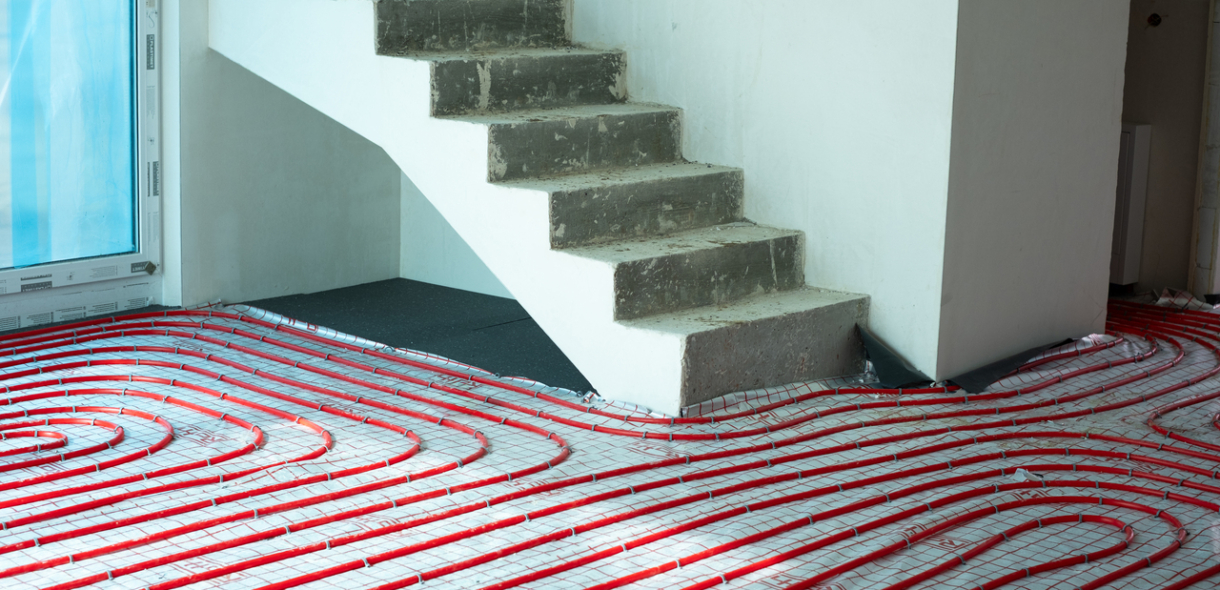
Estimated reading time: 8 minute
Homes in developer standard that we offer are primarily based on a proven two-storey layout. It’s a solution that has been extremely popular for years – and for good reason. On the ground floor, we have the living area: a spacious living room, kitchen or kitchenette, and a toilet, and in larger homes also an additional office. This is where everyday life happens – we host guests, relax, and eat meals.
The upper floor is the private zone – bedrooms, children’s rooms, and a bathroom. It’s a more intimate space, where guests are usually not invited. This division is natural, convenient, and simply works.
And right between these two zones are the stairs – an element that connects the entire house not only functionally but also visually. We have already written about how to arrange a wall above the stairs and how to use the space under the stairs. Today, however, we will focus on how to finish the stairs themselves so that they become a cohesive part of the interior.
Table of contents
Stairs in the living room
In modern terraced houses, stairs are very often located in the living room. This means they are no longer just a functional element – they become an important part of the interior design. Their finish should match the flooring, furniture style, and overall character of the space.
Trends for 2026 clearly show the direction: we are moving away from heavy, built-in structures and glossy surfaces in favor of lightness, natural materials, and matte finishes. We increasingly see combinations of wood and metal, light colors, and openwork forms that do not overwhelm the interior.
Stair lighting is also becoming increasingly important – LEDs in steps, light strips along the wall, or wall lamps. It’s both a decorative element and a real boost to safety after dark.
Well-designed and finished stairs can visually enlarge the space, add elegance, and make the entire home feel cohesive.
Ways to finish stairs
Choosing a material for stairs is not only about aesthetics, but above all functionality, durability, and comfort of use. It’s worth thinking this decision through carefully, because stairs are one of the most heavily used elements in a home.
Wood
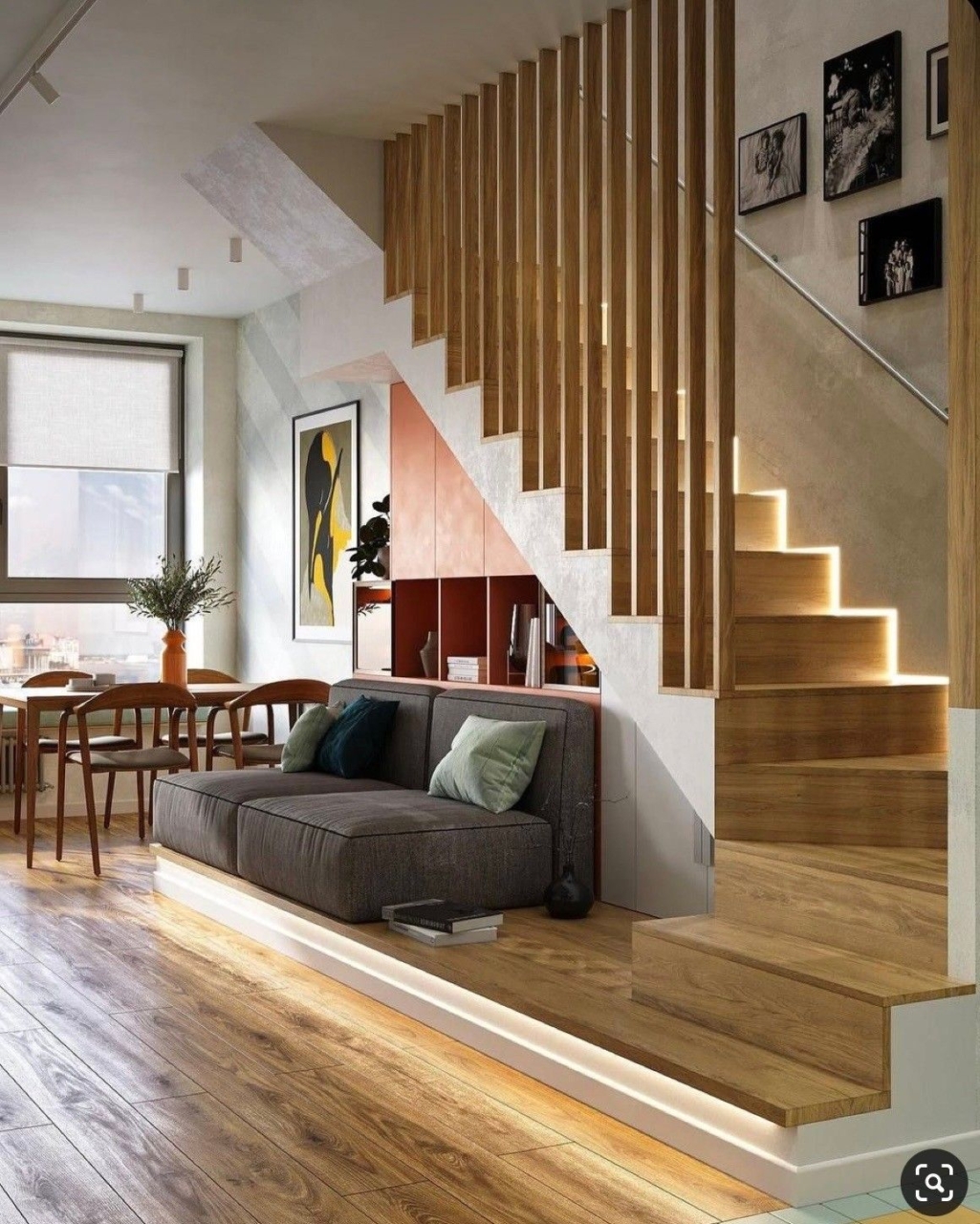
Stairs finished with wood, especially in a light oak shade, are one of the most commonly chosen solutions. They provide a sense of warmth and naturalness, blend perfectly with the living room, and align with current trends.
Their huge advantage is timelessness – they fit both modern and more classic interiors. Combined with metal or glass railings, they create a very elegant effect.
However, it’s important to remember that wood requires proper finishing. The most durable solution is lacquer – especially modern matte finishes that protect against scratches and moisture without creating a glossy look.
An alternative is oil finishes, which look very natural and are easier to refresh locally, but are less resistant to heavy use and require regular maintenance.
It’s also worth considering the budget – covering reinforced concrete stairs with wood can cost around PLN 10,000–30,000, depending on the structure and railings.
Microcement
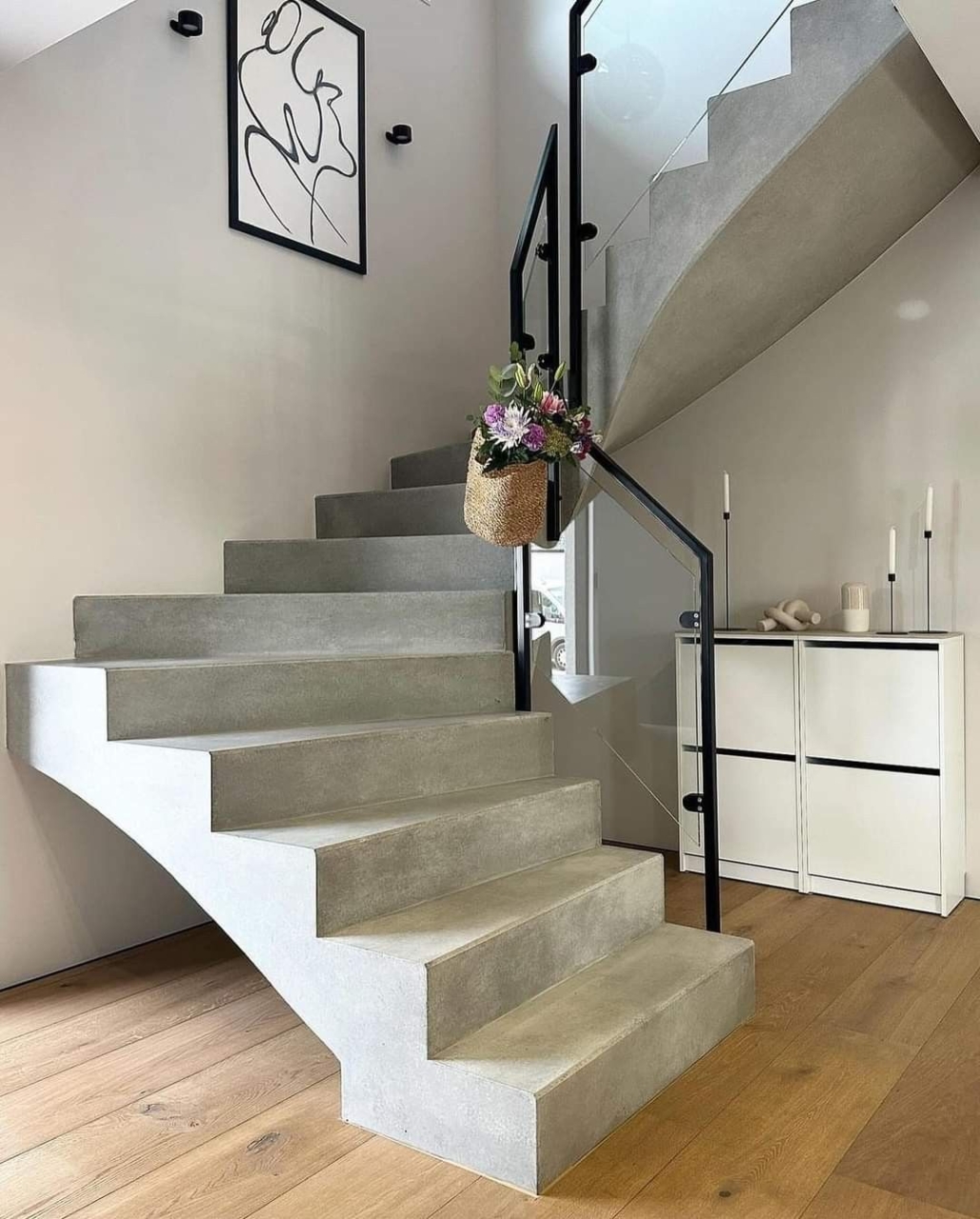
Microcement is a solution for those looking for something more modern and minimalist. Its smooth, seamless surface fits perfectly into contemporary interiors and creates a cohesive effect with the living room floor.
It is a material resistant to moisture and abrasion, but it requires a very skilled contractor. If the substrate is poorly prepared, it may crack, especially on reinforced concrete stairs that naturally work.
It’s also important to consider safety and use appropriate anti-slip protection (e.g., additives in the lacquer).
Tiles and porcelain
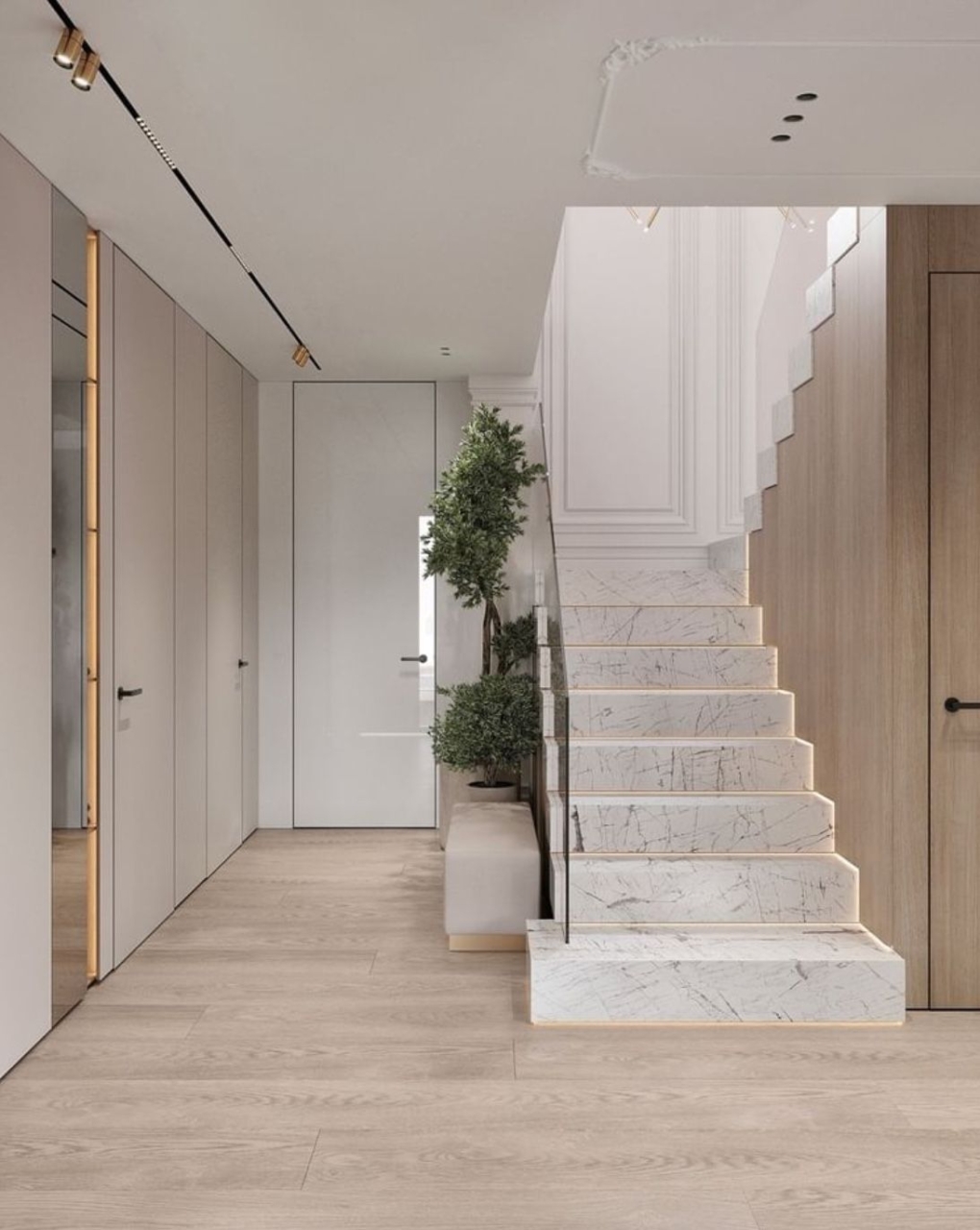
This solution is often chosen for its practicality. Tiles are water-resistant, easy to clean daily, and available in many variants – including those imitating wood or stone.
On the other hand, they have their limitations. Grout, especially in light colors, will get dirty over time and requires regular cleaning and maintenance. The stairs themselves may also feel colder – both visually and to the touch, which matters if you walk barefoot or have small children.
It’s worth paying attention to tile divisions. Visible joints can affect the perception of the entire living space, so it’s important to carefully plan the tile format, layout, and cutting points at the design stage. This detail has a big impact on the final result. It’s a reasonable option, although less “designer” than wood or microcement.
Vinyl panels
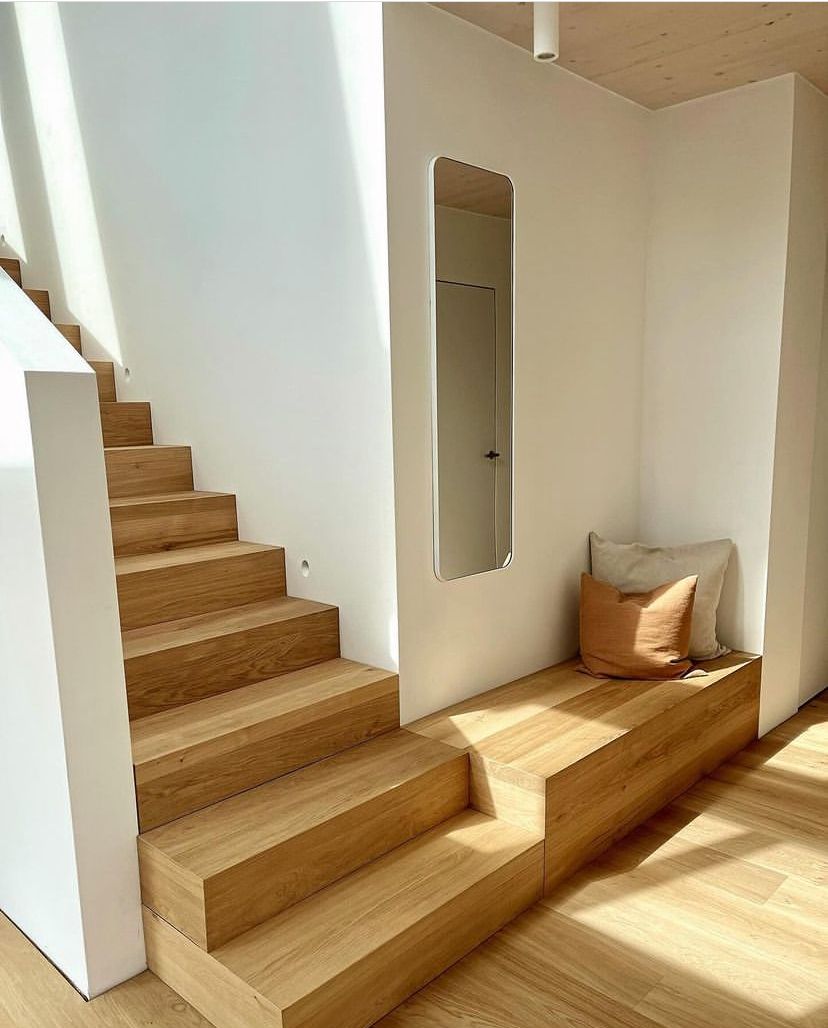
Vinyl panels (LVT) are becoming increasingly popular, especially in family homes with small children, pets, and lots of daily activity. They are waterproof, quiet, and very comfortable to use. High-quality LVT is often more resistant to scratches and impacts than natural wood. The cost of finishing stairs with LVT is a fraction of the price of wood, making it a very popular choice for budget-friendly home finishing.
Stair railings
You should not forget about the railing, which has a huge impact on the overall look of the stairs. In 2026, lightweight designs dominate:
- glass railings that visually enlarge the space,
- metal elements in a black matte finish,
- combinations of wood and metal.
It is often the railing that determines whether the stairs look modern and light.
What to avoid when finishing stairs?
Stairs in developer-standard homes are usually a reinforced concrete structure that requires proper preparation. Mistakes at this stage can be costly and difficult to fix.
First of all, it’s not worth attempting to finish them yourself without experience. Uneven concrete can lead to cracks in materials, especially with microcement or wood.
It is also worth avoiding:
- carpets – they get dirty quickly and accumulate dust and mites,
- high-gloss finishes – they highlight dirt and scratches,
- heavy, built-in structures – they visually reduce space,
- lack of anti-slip protection – especially on turning stairs.
Maintaining correct step dimensions is also extremely important. Even small differences can disrupt walking rhythm and increase the risk of tripping.
What to remember when finishing stairs?
Stairs should be an extension of the living room – both visually and functionally. It’s best to plan their finish together with the ground floor flooring to achieve a cohesive effect.
It’s also good to think about the future – if there will be children or pets in the home, it’s worth choosing materials that are easy to maintain and resistant to damage.
Stairs are an element that organizes space, creates a natural division of zones, and offers huge design possibilities.
Two-storey houses
If you dream of your own home that you can adapt to your lifestyle – homes from Novisa Development are a good choice.
A two-storey layout, garden, parking spaces, and well-thought-out interiors offer much more than an apartment in a block. And the stairs? They’re just one of the elements you can design exactly the way you want.
Check the current offer and find a home that will become your place for years.